Wednesday, December 11, 2013

Response to The Ginger With a Soul's post "Getting Deep- I have a soul?" 

In this post, Evan gets down to what truly draws him into the game Kingdom Hearts and that being the complexity of the story line as well as the endearing characters that you can attach yourself to. I believe that many other people can relate to him and his feelings for this game. I think these feelings ring true for a fan of anything. We all get that feeling towards the things we love whether it be games or shows or a book series. 

 As a fan of anime, I find myself relating to Evan in the way he does to the characters of the series. When I find an anime with strong characters with a good background, I find myself going through the journey with them. In Inuyasha, I felt Kagome's pain every time Inuyasha went to see Kikyo. I felt Rin's pain after he realized what he had said to his father after he died in Blue Exorcist. I feel Lucy's happiness every time she feels her friends deeply care about her and that she finally has somewhere she belongs and her sadness through all her hardships.  

I find myself attached to these characters and their emotions before I know it. I think Evan's feelings can be shared between all the fandoms. Stories with well developed or strong characters are what make fiction worth while.There is a frequent disagreement between people that an interesting story is more important than interesting characters, but I think that both are needed. Good characters are often good characters because of events that show their true color: how they really feel or how strong (or weak) they are. So just picking one would leave its influence on the other. As Evan said, we can learn many things about life from characters as well as make connections to their situations or feelings. So, what do you guys connect to? What shows, books, games, or other things do you walk through an emotional journey with?


Monday, December 9, 2013

Fans and stuff like Princess Mononoke and Bleach

               We fans today have so many more resources today than even ten years ago. STREAMING SITES—‘nuff said. We can have stuff 24 hours after it comes on in Japan. That’s crazy. In anime’s beginnings, people had to sub their own stuff or buy it from someone who did. That’s a lot of work. It’s no wonder it didn’t get popular until they showed in on TV. Since we no longer have to rely on networks, we can get things without worrying about deodorizing. We’re getting whatever Japan puts out there. Still, do we care about the culture? If you don’t, do a lot of other people? Should we? Is that what really draws us to anime?

 Princess Mononoke is very popular in America and has been analyzed by Antonia Levi to look for such things. It’s full of Japanese culture like to the Ainu indigenous people, to the Muromachi Period of industrialization, and to the Shinto Religion. In Levi’s essay “The Sweet Smell of Japan: Anime, Manga, and Japan in North America”*, she says that “both the history and references to an ancient mythology that gives Princess Mononoke so much of its power are understandably lost on most North Americans” because they thought of it as “an exotic environment and a battle between industrial polluters and anthropomorphized nature”.

 BUT, where she says that viewers only see it as fantasy, we have to think about it. This particular Miyazaki film had a large number of American viewers in part by the advertisement and hosting in theaters by Disney if any of you remember. So, when Levi makes these assessments, she is looking at a large group of viewers, many of which are not dedicated anime viewers. When people don’t stop to think about what the study is looking at, people can make general statements about an area such as all of North America without looking towards those who would have an interest in the subject. So, if this study were to focus more anime FANS, this result might be different.

Another study that was done with fans of Bleach is by Dana Fennell, Ana S.Q. Liberato, Bridget Hayden, and Yuko Fujino called “Consuming Anime”. When they asked the fans about the content, they “considered the context of the anime’s production, distribution, and exhibition” and were “not oblivious to the show’s Japanese origins” and “professed to prefer watching subbed rather than dubbed versions” (which I personally don’t for Bleach because I think the English voice acting is awesome) but these fans had no problem identifying anime’s roots and a small interest in the language—subbed version.

This last study is by Susan J. Napier in her book “Anime: from Akira to Princess Mononoke: Experiencing Contemporary Japanese Animation” (Which is really cool and you should check it out), and she tries to find what attracts viewers to anime. The study asked this question and the top answers were  its thematic complexity, that it’s outside the mainstream, that  it can be watched by any age group, the “sense of freedom (of expression) which tends to lack in [the] American counterpart (American cartoons)” , its ability to create an exotic or utopian world, and the better quality of the animation. Which I think are all good reasons.

She also asked if “they felt that they learned about Japanese culture from anime”—86.7 percent said yes. She then asked if it was one of their main reasons for watching—45 percent said yes. She also collected that 41 percent were taking a Japanese language course and 10 percent had visited Japan. I was actually a little surprised by this. These numbers were higher than I thought it would be. Napier though, concludes that the main draw wouldn’t be Japanese culture but a new “media culture” that is completely its own and a fantasy world created by that media—I don’t buy it.

 All three of these studies explain that the reason fans watch is because of other aspects of the show or a “media culture” that is not distinctly Japanese. What the studies fail to think about is that even these interests that seem to be unlinked to Japanese culture, actually could be. Fans in America watch anime because it presents things that we don’t have in American culture or media. Which I think is mostly true. I mean, we have good cartoons like Adventure Time and Regular Show, but the majority of others are like Uncle Grandpa (EW.) and kid’s shows like Dora. But if you think about it, this desire for something that’s unlike what we have is in and of itself is at least some interest in Japan and the ideals that are put forward in its media.
         
   I do believe that there is at least some influence, even subconsciously, to the allure of Japan in that it may hold parts of that fantastical world that fans adore. Travel to Japan since 1964 has grown from 352,832 thousand tourists to 8,368,100 tourists in 2012(http://www.tourism.jp/en/statistics/inbound/)

If nothing, this is showing an increased interest in the country. Whether this has grounds in anime influence is questionable, but as shown by Napier’s study, at least some of them are anime fans. 
           

            Even if it’s small, I think at least some part of fans do care. I never really have thought of it as my main reason, but I do enjoy the culture and think it’s neat and have recognized stuff. Let me know what you think. Do you think it’s one of your main reasons? You know someone who is like that? You think that it’s important? You think we have a subconscious draw to it or is it really just a fantasy world? Let me know! Thanks for reading! 


*The Sweet Smell of Japan: Anime, Manga, and Japan in North America” by Antonia Levi (published in the Journal of Asian Pacific Communication (John Benjamins Publishing Co.); 2013, Vol. 23 Issue 1, p3-18, 16p

Wait, There's Culture in Anime?

You like anime? If you do, then do you know where it comes from? Many kids see Naruto or Dragonball Z on Cartoon Network and don’t or can’t recognize the things that indicate its roots. The Japanese culture represented in anime ranges from small things like drinking tons of tea every three seconds or less obvious things like when a tea leaf sticks up in your tea, it means good luck.

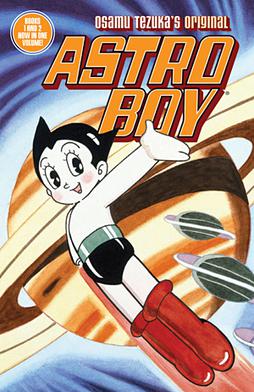
These types of things didn’t always show up in American viewed anime though. This can be seen most clearly in the earliest animes viewed on American TV’s like Astro Boy or Speed Racer from the 50’s and 60’s. If you’ve seen either one (which I haven’t because they’re pretty boring compared to new stuff, but everyone has their opinions) then you can see that there isn’t much Japanese culture to see there. Why? They were actually geared towards American audiences. Astro Boy was based on American style cartoons and only shown dubbed while Speed Racer was made after the American auto craze (y’know, Hot Wheels stuff).

This cultureless type of show has been called “odorless”. Scholars such as Antonia Levi in her essay “The Sweet Smell of Japan: Anime, Manga, and Japan in North America” explain this in full detail and there are many great articles on it. In her article, Levi explains that making something odorless is “the efforts made to promote Japanese products abroad by reducing or erasing cultural identity”. Networks were afraid that people would dislike shows because of Japanese odor.

These cultureless animes were the only ones shown on network television for a while until the American run of Star Blazers. If you’ve seen that one that you can probably notice at least a few things. If you compare the dubbed and subbed, you can tell for sure:here’s a picture of the battleship in the show:       


And Here’s the Yamato battleship from WWII:


  See any similarities? The show has heavy basis in WWII and tries to recreate it in a way where the Japanese win and the blonde guys (Americans) are evil. I have no resentment to this premise, but I find it interesting. I didn’t know anything about that because it’s in space and stuff, but it’s there. 

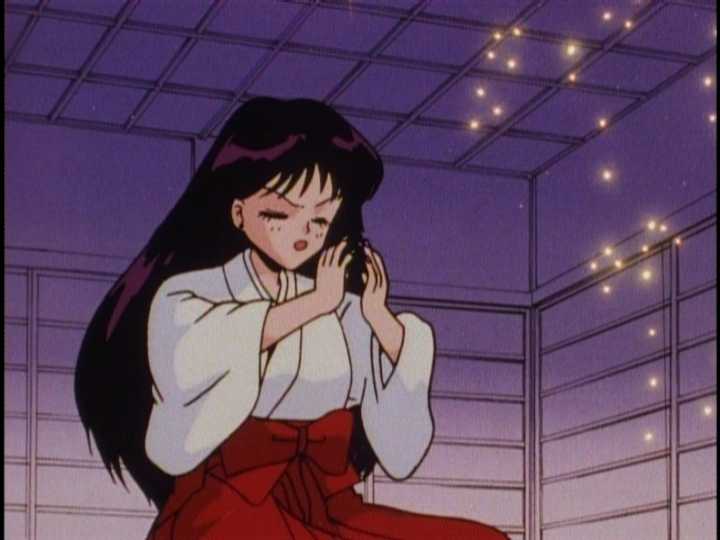
These kinds of things pop up much more in later, showing that networks became less scared of allowing culture and Japanese ideals into programs shown in the U.S. This comes out in shows like Sailor Moon and Inuyasha (which are two of my FAVORITE ANIMES EVER. If you haven’t seen them, go do it. Like now.) Like in Sailor Moon, the names in the dub are really similar to their Japanese names (Ami was Amy, Rei was Ray, Minako was Mina) and Rei is a shrine priestess or a miko and has some miko related powers.          
            
             Inuyasha is based in Japan’s feudal era and shows many things about historical beliefs such as that of Shinto priests and priestesses having magical powers, the existence of demons (youkai) and kappa (mischievous water children), and legends such as the fruit of longevity.
           This culture has been allowed into today’s anime, but how important is that to today’s fans? Next Time! Anime fans and Japanese culture through the show Bleach, the Miyazaki film Princess Mononoke, and a really cool study that shows stuff about us as fans and what really draws us to anime. Let me know in the comments if you know of any other references in the shows you like, or if you didn’t know about the things I mentioned or if you actually like the old shows like Astro Boy or Speed Racer. See ya next time.  


*The Sweet Smell of Japan: Anime, Manga, and Japan in North America” by Antonia Levi (published in the Journal of Asian Pacific Communication (John Benjamins Publishing Co.); 2013, Vol. 23 Issue 1, p3-18, 16p